
Open Source With Enterprise-Grade Ownership and Support
Open-source platforms deliver flexibility and interoperability when patching, dependencies, upgrades and support are owned from day one, with the governance expected of business-critical technology.
Enterprise Open-Source Capabilities
Product and architecture fit assessments
Security, dependency, and supportability review
Platform implementation and configuration
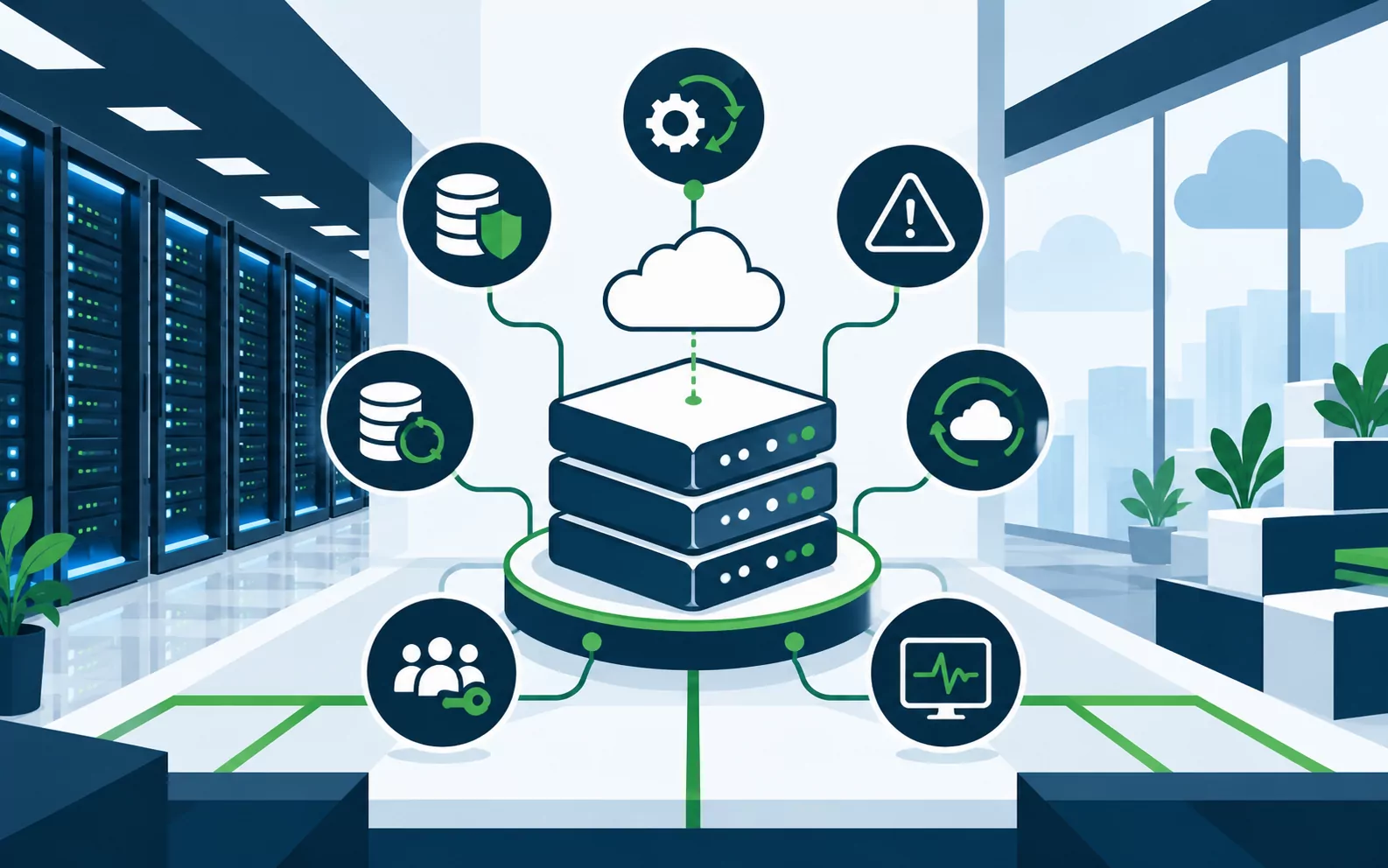
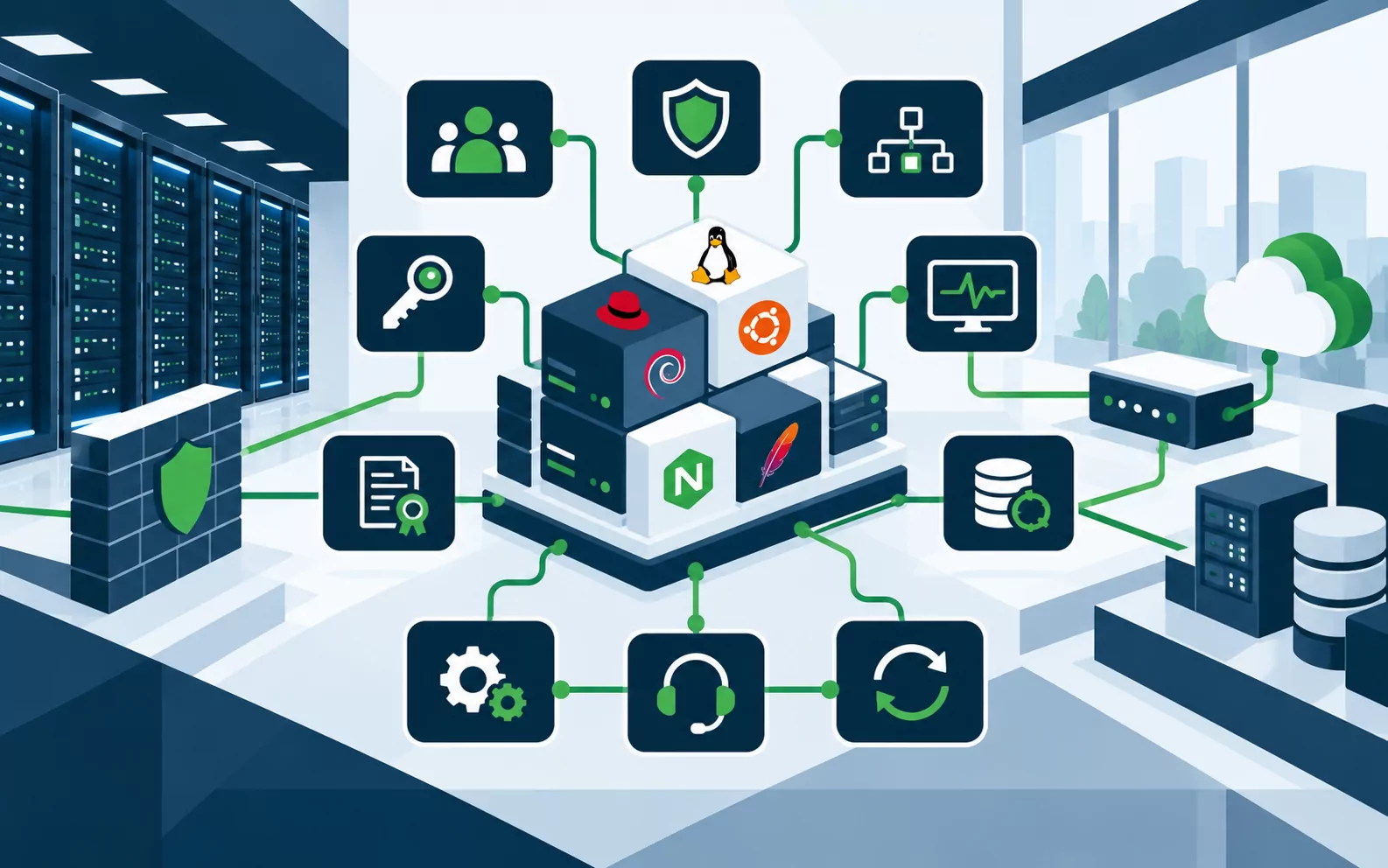
Integration with identity, network, monitoring, backup, and service management
High availability and resilience design
Upgrade, patching, and lifecycle planning
Documentation and knowledge transfer
Ongoing maintenance and support models
Enterprise Open-Source Ownership Model
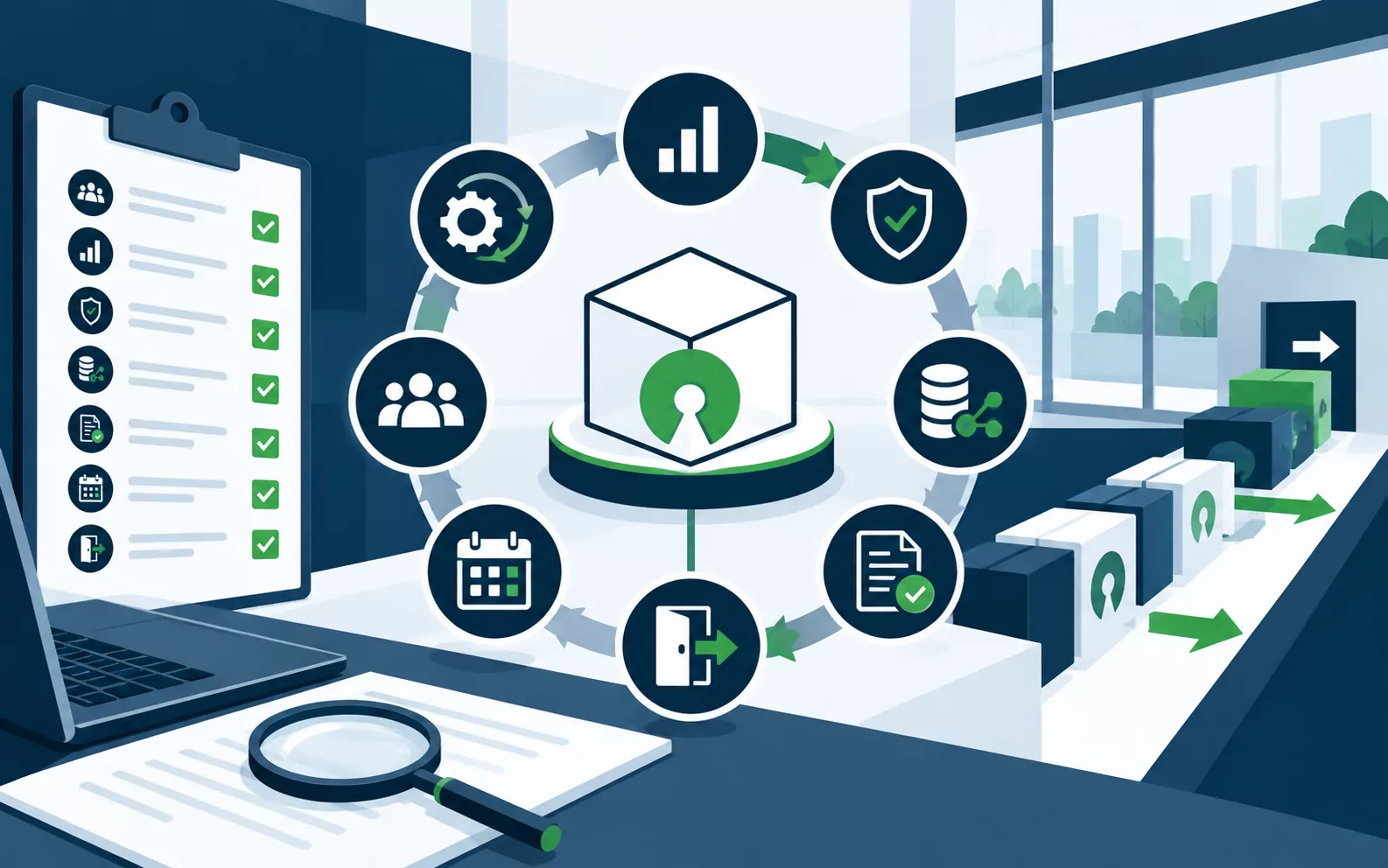
Connect platform selection to architecture, security, lifecycle management, support, operating ownership, and an eventual exit path.
Select
Assess
Implement
Integrate
Operate
Evolve or exit
Vendor-Neutral Selection
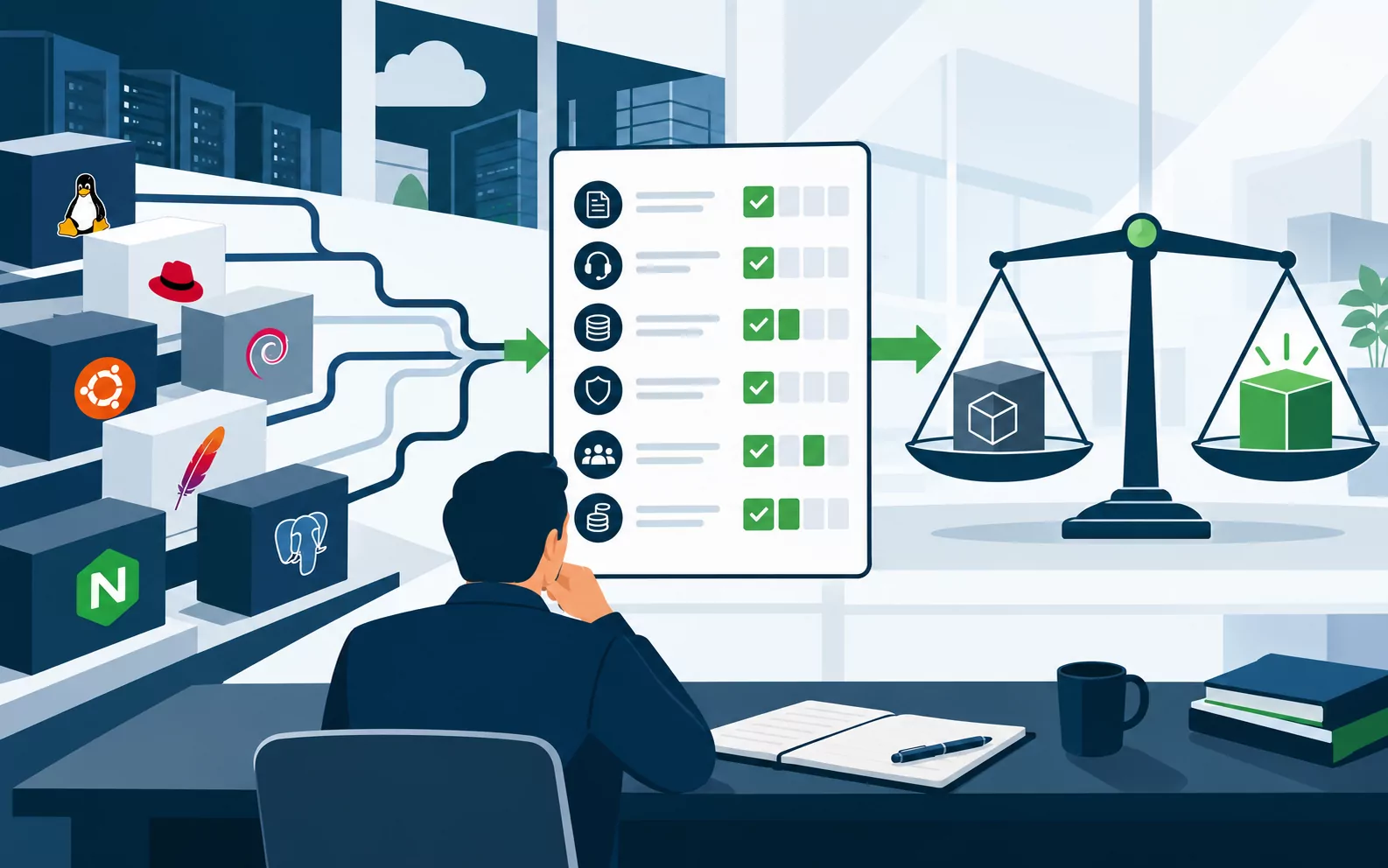
The right open-source choice depends on your requirements, not on a vendor’s catalog. Independent selection protects the business from lock-in and from projects that cannot be supported long term.
Selection starts with the requirement, not the product: functional fit, support model, release maturity, security posture, skills and exit cost are weighed first. Options are compared side by side, so stakeholders can see the trade-offs behind every recommendation.
Requirements definition and option shortlisting
Side-by-side evaluation of community and commercially supported options
Proof-of-concept testing against real use cases
Total cost of ownership and exit-cost analysis
Selection recommendation with documented rationale
Open-Source Platforms Selected, Hardened, and Ready to Own
Outputs cover the full lifecycle, from product fit to upgrades, so the platform has clear ownership and a support path after go-live.
Product fit, risk, and supportability assessment
Target architecture and implementation plan
Hardened configuration and integration design
Availability, backup, recovery, monitoring, and upgrade procedures
Software inventory and dependency-management approach
Operating model, runbooks, knowledge transfer, support options, and lifecycle roadmap
Open Source the Enterprise Can Own
Reduced dependency on proprietary platforms where appropriate
Better visibility into open-source operational risk
Defined upgrade and security maintenance processes
Integration with enterprise controls and support workflows
Related Services
Platform Engineering
Self-service golden paths that give product teams a governed route to production.
Explore Platform EngineeringCloud Modernization
Workloads modernized in sequence by value, risk and readiness.
Explore Cloud ModernizationManaged Security Services
Defined security coverage, escalation and reporting that extend the internal team.
Explore Managed Security Services