
Configure ServiceNow Around the Enterprise Operating Model
ServiceNow creates value when workflows, ownership, data and integrations reflect how the organization operates. Implementation is tied to defined business outcomes and released in measurable phases.

ServiceNow Capabilities
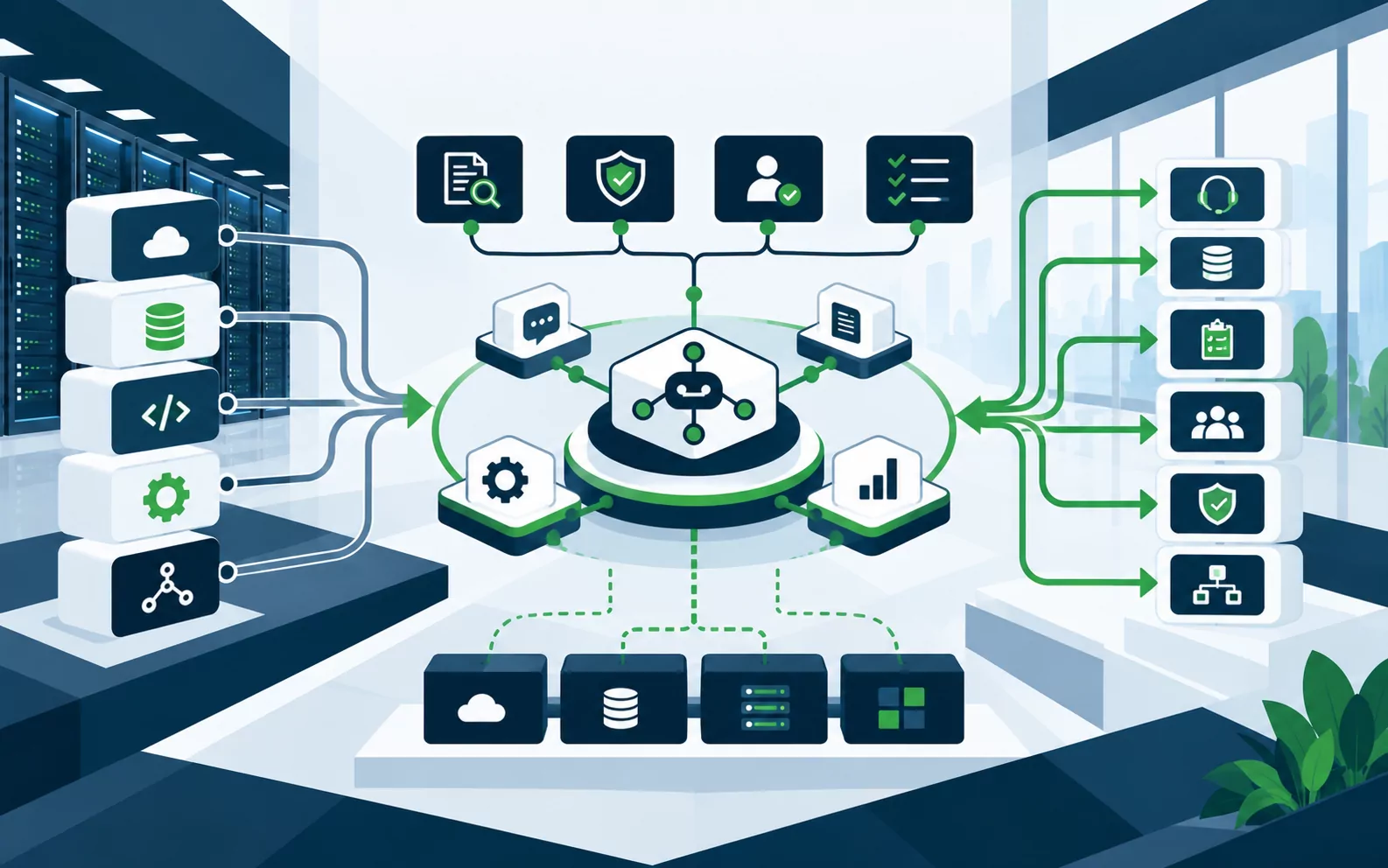
Platform strategy, roadmap, and current-state assessment
IT Service Management and IT Operations Management
Strategic Portfolio Management
IT Asset Management and related asset workflows
Customer Service Management, HR Service Delivery, Workplace Service Delivery, and Field Service Management
Security Operations and Integrated Risk Management
App Engine and custom workflow applications
Workflow Data Fabric capabilities (including Integration Hub) and Automation Engine
Integration, data, identity, and access design
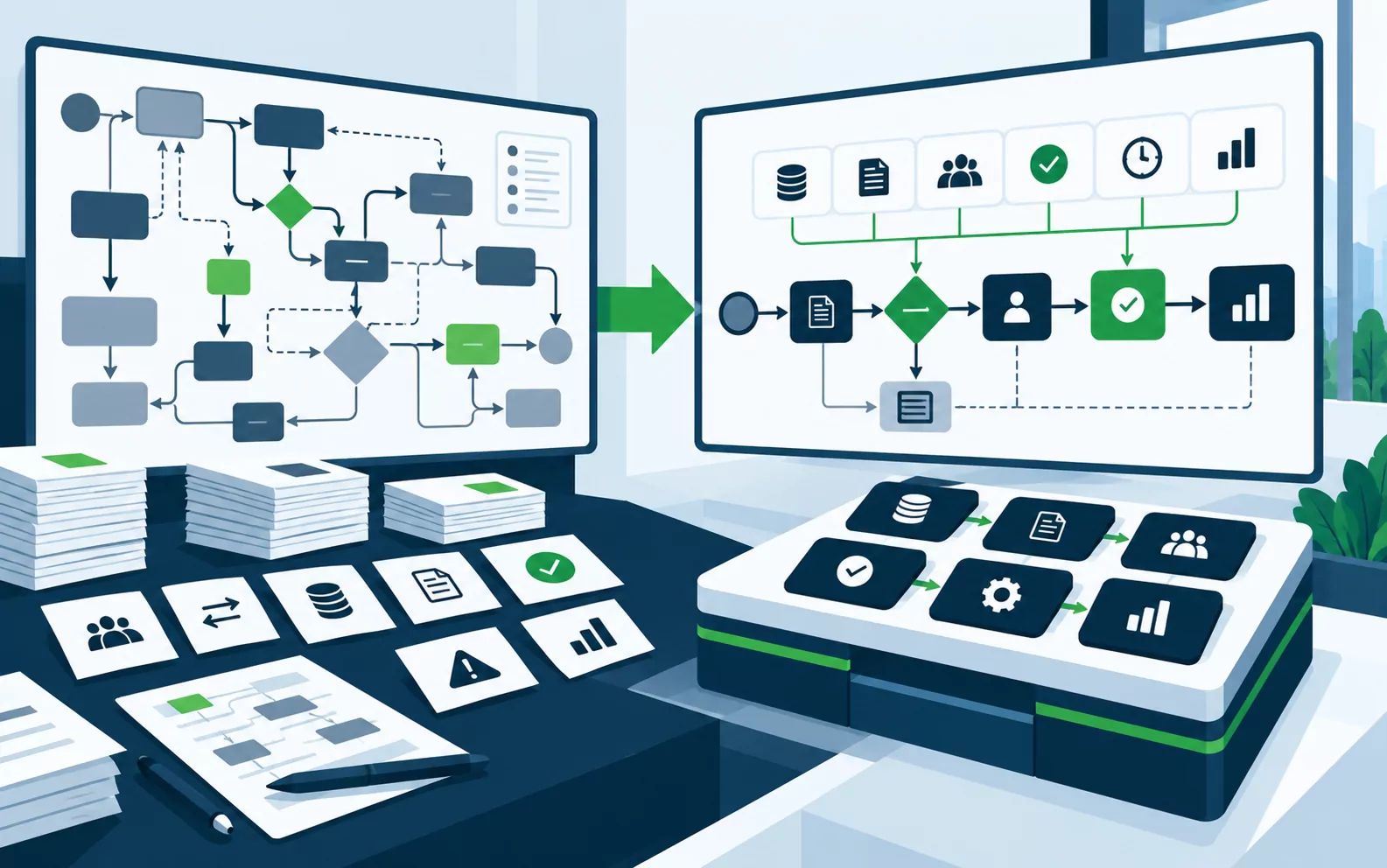
Workflow redesign and process optimization
Platform governance, release, and support models
AI-enabled workflows and agentic capabilities
Module availability depends on the ServiceNow release and entitlements in place.
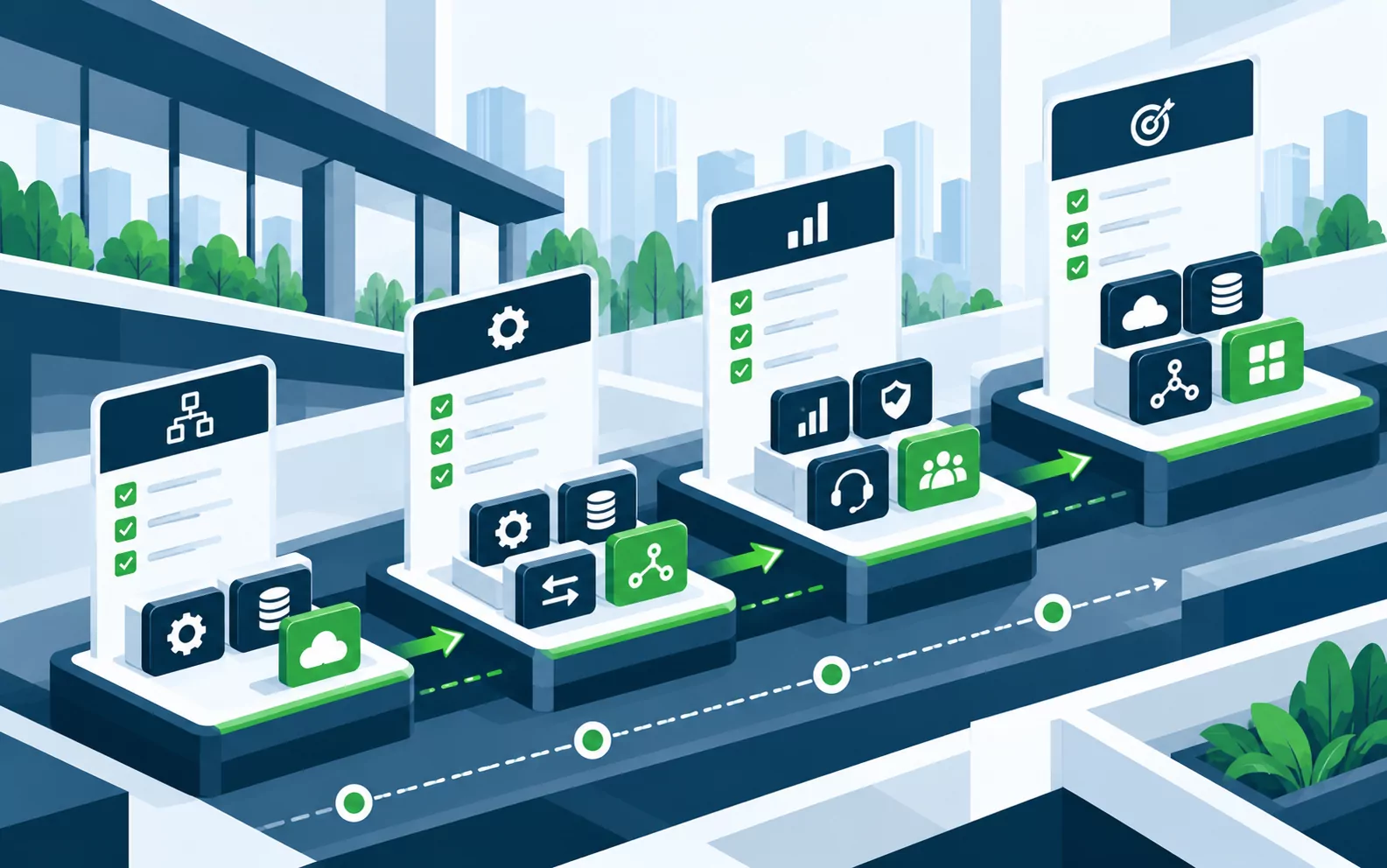
Enterprise Workflow Canvas
Follow a business request across people, platform, data, approvals, integrations, service expectations, and resolution.
Request
Triage
Enrich
Approve
Fulfill
Measure
AI and Agentic Capabilities
ServiceNow AI can take real work off service teams when it is applied to the right processes with the right controls. Implementation focuses on value that can be measured and governed.
ServiceNow AI capabilities, including AI Agent Studio, AI Agent Orchestrator, AI Control Tower and Action Fabric, are evaluated and implemented where they fit the architecture and license. The work covers use-case selection, data and access controls, human approval points, integration, logging, testing, adoption and operational governance, validated against the client’s release and entitlements.
AI use-case selection and business case
AI agent design and implementation with AI Agent Studio
AI governance set-up with AI Control Tower
Data, access and human-approval controls
Testing, adoption and operational monitoring
Implementation Lifecycle
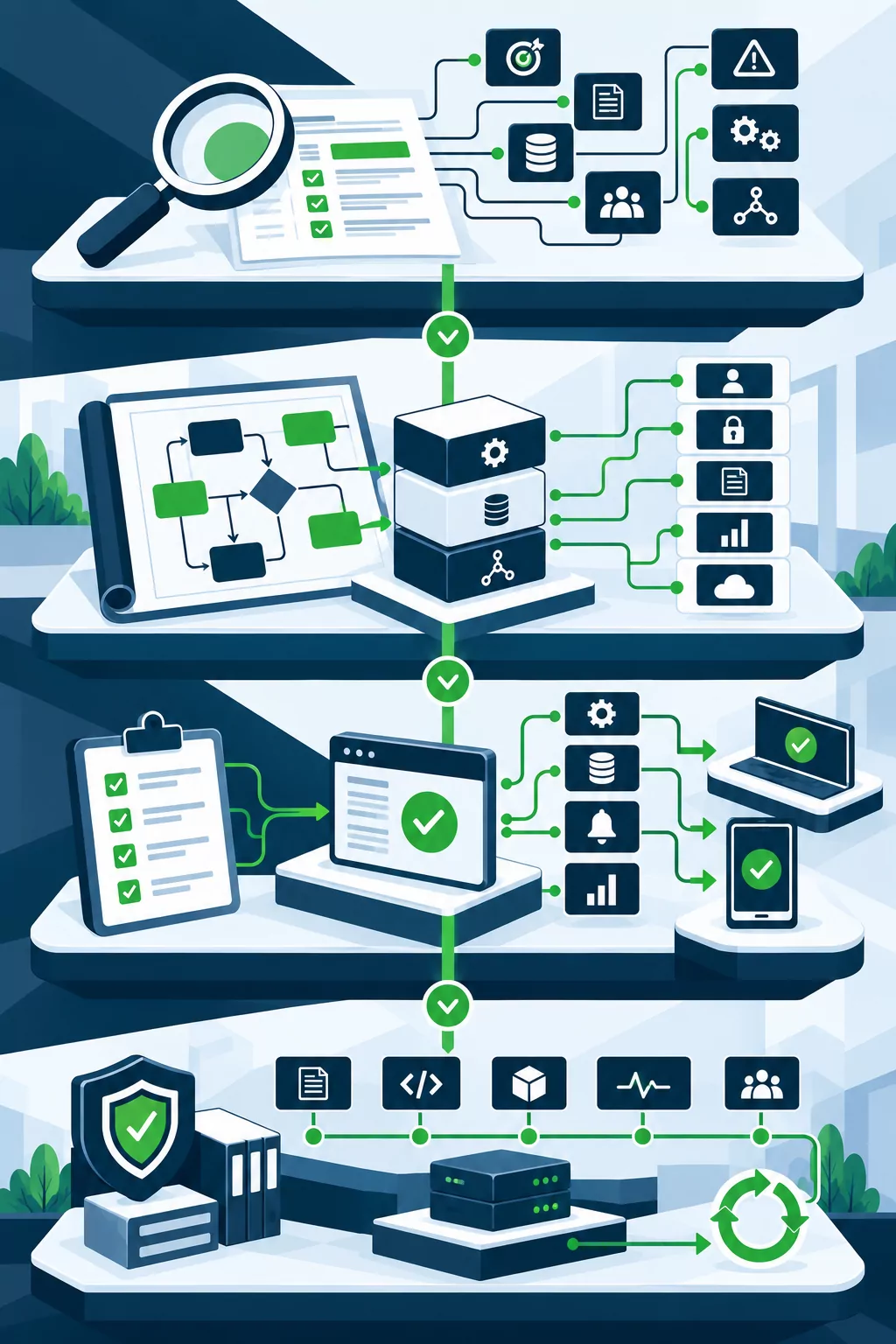
Discover and Prioritize
Business outcomes, process pain points, platform condition, licensing, integrations, data quality, and adoption constraints are reviewed. The initial release is selected based on value, feasibility, and readiness.
Design and Configure
The process, data, role, integration, security, reporting and support design is developed as one. Configuration favors maintainable platform capabilities and documents justified customization.
Validate and Adopt
Testing covers workflow behavior, roles, integrations, data, notifications, reporting, error paths, and operational support. User enablement and adoption measures are included in release planning.
Govern and Improve
The platform operating model defines demand intake, architecture review, development standards, release management, administration, performance monitoring, and ownership of the improvement backlog.
ServiceNow Configured Around Your Processes, Released in Measurable Phases
Outputs start with process and solution design, then deliver configured workflows, tested releases, and the governance to run the platform.
Platform assessment and phased roadmap
Process and solution design
Configured workflows, roles, integrations, and reports
Data migration and validation approach
Test, release, adoption, and transition plans
Governance model, runbooks, and knowledge-transfer materials
Platform Value Leaders Can Measure
Workflows aligned to the operating model
Better visibility across requests, services, risks, and work
Reduced manual handoffs and duplicate tools
Clear platform governance and ownership
A structured roadmap for optimization and expansion
Related Services
Intelligent Automation and Agentic AI
Automation with clear boundaries, human approval and measured results.
Explore Intelligent Automation and Agentic AIGovernance Risk and Compliance
One control framework that satisfies multiple obligations with evidence from daily operations.
Explore Governance Risk and ComplianceProject and Program Management
One governed view of teams, vendors, dependencies and decisions.
Explore Project and Program Management